
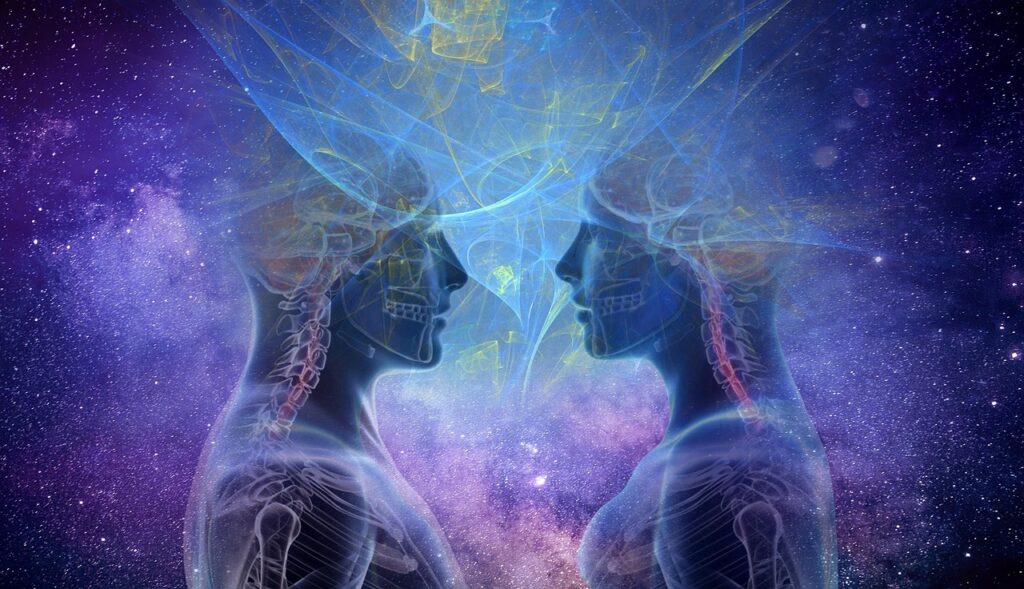
 Few spiritual phrases have been as misunderstood as the end of desire. For many, it conjures images of withdrawal, detachment, emotional flattening, or a life drained of passion and intimacy. It can sound like a quiet kind of disappearance, safe, perhaps, but diminished.
But the end of desire is not the end of life. It is the end of living from lack.
What ends is not aliveness, longing, creativity, or love. What ends is the belief that something outside of us is required to make us whole.
Desire, in its most familiar form, arises from the sense of incompleteness. It says: When I get this, then I will be okay. When this happens, then I will be fulfilled. It is future-oriented, restless, and subtly anxious. Even when it is satisfied, it does not rest for long. It simply reshapes itself and looks for something new.
When awakening begins to mature, this structure starts to loosen. Not because desire is suppressed or rejected, but because it is seen through. The engine that fueled it, the belief in separation, quietly dissolves.
What remains is not emptiness, but presence.
Life no longer feels like a problem to be solved or a destination to be reached. It is met directly, moment by moment, without the overlay of constant wanting. This does not produce indifference. It produces intimacy with what is.
The end of desire is the end of grasping.
When grasping falls away, appreciation appears. Where there was once urgency, there is now spaciousness. Where there was once striving, there is now participation. Life continues to move, but it moves without the tension of needing to arrive somewhere else.
This is why the end of desire does not extinguish joy, it deepens it.
Joy, freed from comparison and anticipation, becomes quieter and more stable. It no longer spikes and crashes. It settles into the body like a warm, steady presence. Pleasure can still be felt. Beauty still moves the heart. Connection still matters. But none of these are burdened with the demand to complete us.
They are enjoyed, not consumed.
One of the great fears people carry is that without desire, love will disappear and that relationships will lose their intensity or meaning. In truth, the opposite is often the case. When desire ends, love is finally relieved of its role as a compensatory mechanism.
Love no longer says, I need you to feel whole.
It says, I meet you from wholeness.
This shift changes everything.
Relationship becomes a meeting rather than a merging, a sharing rather than a grasping. There is room for closeness without suffocation, for space without abandonment. Intimacy becomes less about intensity and more about truth. Less about possession and more about presence.
Without desire driving the interaction, there is nothing to manipulate, secure, or protect. What remains is honesty, sometimes tender, sometimes challenging, but always real.
The end of desire also changes how one relates to life itself. Decisions are no longer made primarily from fear of loss or hope of gain, but from resonance. There is a felt sense of what aligns and what does not. Action still happens, but it arises organically rather than compulsively.
Life is lived forward, but not toward something.
This does not make life smaller. It makes it simpler and, in that simplicity, more spacious.
There is a quiet relief in no longer negotiating with the future for permission to be at peace. No longer postponing contentment until certain conditions are met. Peace is not achieved; it is uncovered.
And from that peace, life continues, rich, textured, unpredictable, and fully human.
The end of desire is not the end of movement. It is the end of being driven by hunger. It is the end of mistaking longing for love and striving for purpose.
What remains is a life lived from sufficiency rather than scarcity, from presence rather than pursuit.
And far from being an ending, it is often the moment life truly begins.